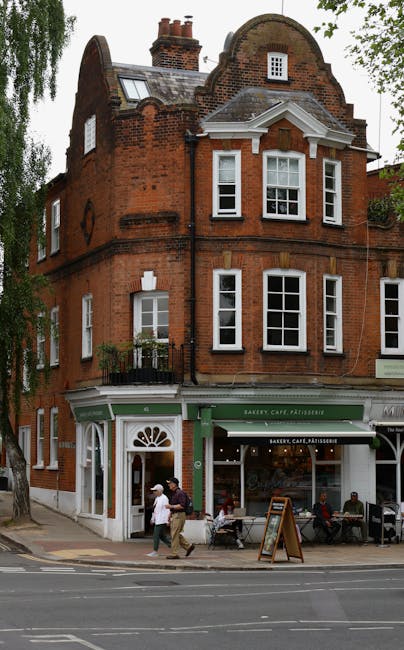
Shopfront clearance case: Hornsey bakery restored in 8 hrs

A shopfront problem has a way of announcing itself loudly. One minute a Hornsey bakery is welcoming people in for fresh bread and coffee, and the next there's blocked access, damaged frontage, and a shop that simply cannot trade properly. The Shopfront clearance case: Hornsey bakery restored in 8 hrs shows what a fast, well-managed clearance can look like when speed, safety, and presentation all matter at once.
This guide breaks down what that kind of restoration actually involves, why it matters to local businesses, and how a rapid clearance is planned without turning the place into a bigger mess. We'll look at the practical steps, common pitfalls, compliance points, and the kind of decision-making that helps a Hornsey business get back on its feet quickly. Truth be told, when the pavement is cluttered and the smell of stale waste starts creeping out front, time is not your friend.
Whether you manage a bakery, small shop, takeaway, cafe, or local unit with a public-facing entrance, the lessons here are useful. And if you've ever wondered how a shopfront can be cleared, cleaned, and made presentable in the space of a single working day, you're in the right place.
- Why this case matters
- How an 8-hour restoration works
- Key benefits and practical advantages
- Who needs this and when it makes sense
- Step-by-step guidance
- Expert tips for better results
- Common mistakes to avoid
- Tools, resources and recommendations
- Law, compliance and best practice
- Options and comparison
- Case study example
- Practical checklist
- Conclusion
- Frequently asked questions
Why Shopfront clearance case: Hornsey bakery restored in 8 hrs Matters
A bakery shopfront is not just a door and a window. It's the first promise you make to a customer. If the frontage is blocked by broken fittings, packaging, spilled stock, or waste left after damage or a rushed repair, people notice straight away. In a place like Hornsey, where high-street visibility and footfall can make a real difference, a messy entrance can affect trading far more quickly than many owners expect.
This case matters because it shows how a clearance job is not simply about "taking stuff away." It's about restoring access, removing hazards, protecting staff and customers, and getting the business back into a usable state without dragging the process out for days. An 8-hour turnaround may sound ambitious, but with the right preparation, the right crew, and a sensible plan, it is achievable in many real-world scenarios.
There's also a branding angle. A bakery relies on freshness, order, and trust. If the front of the shop looks neglected, even temporarily, customers may assume the same about the products or service inside. Fair or not, that's how people read a street-facing business. A neat frontage says: we're open, we care, and we're on top of things.
For local businesses, this is where clearance work becomes operational support, not just waste removal. It touches customer experience, safety, and continuity of trade. And yes, it can save a day's takings or more, which is not a small thing for a neighbourhood bakery.
How Shopfront clearance case: Hornsey bakery restored in 8 hrs Works
An 8-hour shopfront restoration usually starts before anyone lifts a bag or moves a display. The first step is a quick site assessment. What needs removing? What is still usable? Is there damage to glazing, signage, shutters, or flooring? Is the area safe for staff and the public? These questions shape the whole job.
In practical terms, the process often follows a sequence like this:
- Survey and prioritise the visible and hidden issues, including blocked access routes and any sharp or unstable materials.
- Separate salvageable items from waste. Some fixtures, stock, or packaging can be reused, recycled, or stored elsewhere.
- Clear the frontage first, because public access and presentation are usually the top priorities.
- Remove waste in phases so the shop can keep moving without being overwhelmed by piles of debris.
- Check surfaces and entry points for residue, broken fragments, damp, odour, or safety risks.
- Finish with a presentable reset so the business can reopen or at least function safely while further repairs are arranged.
That sequence sounds simple. It rarely is. In the real world, a bakery may have mixed waste streams: cardboard, plastic wrap, damaged equipment, old displays, food-related waste, and awkward bulky items that do not stack nicely. There can be access issues too. Narrow pavements, parked cars, a rear service yard that's not much wider than a broom cupboard - you get the picture.
The speed comes from coordination. A good team knows what to remove first, how to carry it out safely, and where the bottlenecks are likely to be. That means fewer delays, fewer return trips, and less time with the frontage half-finished. One crew member managing sorting while another handles loading can make a surprising difference. Tiny efficiencies add up quickly.
Key Benefits and Practical Advantages
The most obvious benefit is speed, but that is only part of the story. A rapid shopfront clearance gives the business room to breathe. It reduces stress, restores customer confidence, and helps prevent a temporary disruption from becoming a prolonged closure.
Here are the main practical advantages:
- Faster reopening or partial reopening, which keeps revenue moving.
- Improved safety by removing trip hazards, sharp debris, and obstructed exits.
- Cleaner customer impression, especially important for food businesses where presentation matters.
- Better staff workflow because people can move around the premises without working around clutter.
- More controlled waste handling, which reduces the chance of items being dumped haphazardly or left outside.
- Less disruption to neighbours when waste is removed efficiently and tidily.
There's a quieter benefit too: decision relief. When a business owner is juggling trading, repairs, customer expectations, and maybe a bit of panic, a clear plan is worth its weight in gold. You're no longer wondering what happens next. You know who is doing what, and roughly when the space will be back to normal. Or close to it, anyway.
For bakery owners specifically, a fast clearance can also protect stock integrity. Open food areas are sensitive to dust, movement, and contamination risks. Even if the issue is external, a messy frontage can pull in dirt and make the whole site feel unsettled. Clearing promptly helps keep the trading environment calmer and more controlled.
Who This Is For and When It Makes Sense
This kind of shopfront clearance makes sense for any business that depends on public access and visual presentation. Bakeries are a clear fit, but so are cafes, takeaway counters, convenience shops, salons, florists, and small retailers with narrow entrances or display areas close to the pavement.
It is especially relevant when:
- there has been a burst pipe, leak, or flood-related damage near the frontage
- shop fittings have failed or become unsafe
- stock or packaging has accumulated after a busy period
- the premises have suffered vandalism, breakage, or accidental damage
- an inspection or refurbishment has created waste that needs removing quickly
- the front entrance needs to be reset before opening hours
It also helps if you are operating in a high-footfall area where first impressions are critical. In Hornsey, people tend to notice whether a local business looks open, organised, and cared for. A messy frontage can quietly undermine that trust. Nobody says it out loud, but they do it with their feet. They just walk past.
If your business has limited back-of-house storage, this becomes even more important. Small premises fill up fast. One awkward pile of waste can choke your workspace and make simple tasks take twice as long. So yes, the case is about clearance, but it's equally about restoring the rhythm of a working shop.
Step-by-Step Guidance
If you're planning a fast shopfront clearance, the process works best when you treat it like a mini project rather than a rushed clean-up. Below is a sensible structure that helps keep the work efficient and safe.
1. Start with a brief site walk-through
Look at the frontage, entrance path, displays, storage corners, and any customer-facing areas. Note what is bulky, what is fragile, and what may be hazardous. A five-minute walk-through can save an hour later. That's not exaggeration, by the way. It really can.
2. Separate keep, remove, and recycle items
Not everything should go in the same pile. Some items may be reusable, some recyclable, and some simply waste. Separating them early makes the rest of the job easier and supports better disposal practice. If you've ever watched a mixed pile grow arms and legs, you'll know why this matters.
3. Clear access routes first
Make sure doors, exits, and pedestrian paths are open. This protects people and makes the site easier to work on. It also prevents the "we cleared the stuff but still can't move anything" problem, which is more common than people think.
4. Remove bulky items before smaller debris
Large items tend to block movement. Getting them out of the way first creates space for the finer clearing work. It also reduces the feeling of chaos inside the premises.
5. Deal with surface residue and hidden debris
Once the main clutter is gone, check for splinters, broken fittings, dust, wrappers, or anything lodged under counters and display edges. Small scraps can make a space look unfinished even after the obvious mess has gone.
6. Confirm the frontage is presentable
Step back and look from the street. Does the entrance feel open? Are bins, tools, or waste bags still visible? Is the shop window clean enough to avoid looking half-done? This outside-in check is easy to skip, but it makes a real difference.
7. Record anything that needs follow-up
Not every issue is solved by clearance alone. You may still need repairs, deep cleaning, or a review of waste storage. Writing down the follow-up tasks keeps the momentum going after the emergency bit is over.
Practical takeaway: the fastest clearances are rarely the most frantic ones. They are the ones with a simple order, a clear removal route, and one person making the calls.
Expert Tips for Better Results
After enough site jobs, one thing becomes obvious: the best outcomes come from preparation, not heroics. A "just get it done" attitude sounds noble, but in clearance work it can create avoidable delays.
Here are a few expert-level habits that make a genuine difference:
- Plan around opening hours if possible. Early starts often mean fewer interruptions and less public footfall.
- Protect clean areas first so cleared zones do not get dirty again while work continues elsewhere.
- Keep a separate holding point for items that need inspection before disposal.
- Use labelled bags or sections when there are mixed waste types. It sounds basic, but it speeds everything up.
- Don't let one awkward item stall the whole job. Move on and come back with the right approach or tool.
- Work from the public edge inward so the frontage improves visibly as the job progresses.
One subtle tip: keep communication tight. If a bakery owner, site lead, and clearance crew are all speaking loosely about "the back corner" or "that pile near the window," confusion creeps in fast. Clear names for areas and clear priorities keep the whole job steady. Not glamorous, but very effective.
And if you're managing a live business, designate one person to answer questions. Too many voices slows things down. A little structure goes a long way.
Common Mistakes to Avoid
Shopfront clearances fail most often when people underestimate the mess, the access, or the disposal logistics. The mistake is usually not effort. It's sequence.
Watch out for these common errors:
- Leaving the frontage until last, which means customers and passers-by still see a messy site for too long.
- Mixing salvage and waste, then wasting time sorting later.
- Ignoring sharp or unstable items, which can lead to injury or damage.
- Forgetting the final visual check, so the site is technically cleared but still looks untidy.
- Underestimating waste volume, especially after broken shelving, displays, or packaging build-up.
- Trying to do everything in one pass without a clear plan or staging area.
There's also the classic overconfidence trap. Someone says, "It's only a small bakery front, we'll be done in no time." Then the first cabinet is heavier than expected, the packaging is everywhere, and the bin space disappears. Happens all the time. A modest job can still be surprisingly fiddly.
Another one worth mentioning: forgetting about customer perception. A cleared site that still smells damp, dusty, or burnt-out can feel unfinished even if the waste is gone. Presentation matters. A lot.
Tools, Resources and Recommendations
The right tools are not about fancy kit. They're about control, speed, and safety. For a shopfront clearance, especially one with a tight deadline, practical equipment matters more than anything showy.
Useful items often include:
- heavy-duty sacks and bins for mixed lightweight waste
- gloves and appropriate protective wear
- basic hand tools for dismantling loose fixtures
- barriers or cones if there is a public-facing edge
- labels or markers for sorting items
- trolleys or handling aids for bulky loads
- cleaning supplies for the final reset
It also helps to have a clear waste route. If the frontage opens straight onto a busy road, you need a plan for loading without cluttering the pavement. If the rear access is better, use it. If both are awkward, then timing and staging become even more important. You'd be surprised how much smoother the job runs when nobody is carrying things back and forth because "that seemed easier at the time."
For readers comparing service types, the website's broader clearance pages can help frame the decision. If the issue extends beyond the frontage, a business waste removal approach may be more suitable, while a larger internal reset might lean toward office clearance principles. For premises with bulky stock, shelving, or fixtures, the guidance on furniture clearance and furniture disposal can be relevant too.
Law, Compliance, Standards, or Best Practice
For business owners, clearance work is not just a matter of convenience. You have to think about safety, waste handling, and the duty to avoid creating hazards for staff, customers, and the public. The exact obligations depend on the situation, but good practice in the UK usually means taking a careful, documented approach rather than treating waste as an afterthought.
In practical terms, that means:
- keeping pedestrian access safe where possible
- handling waste in a way that avoids spillage or obstruction
- using suitable protective measures for staff and contractors
- separating reusable, recyclable, and general waste where sensible
- making sure any sharp, heavy, or unstable items are controlled properly
- using a provider that takes safety and disposal responsibilities seriously
If a bakery or retail unit is open to the public, the appearance of the frontage is also part of everyday best practice. Customers should not have to step around hazards or wonder whether they can safely enter. That sounds obvious, but real-world sites get messy quickly.
The same goes for insurance and internal procedures. If a clearance is happening after damage, it is wise to document what was removed, what was left in place, and what needed follow-up. Photos can help. So can a simple written checklist. It's not glamorous admin, but it can save headaches later.
For businesses that want a broader look at service standards, the site's pages on health and safety policy, insurance and safety, and recycling and sustainability provide useful context. Those topics matter because good clearance is not just about removing items quickly. It is about doing the job responsibly.
Options, Methods, or Comparison Table
If you're deciding how to handle a Hornsey shopfront issue, it helps to compare the main approaches side by side. Not every situation needs the same response, and sometimes the fastest option is not the cheapest, while the cheapest option is definitely not the fastest. Annoying, but true.
| Approach | Best for | Typical strengths | Possible drawbacks |
|---|---|---|---|
| Rapid shopfront clearance | Blocked frontage, urgent access issues, time-sensitive reopening | Fast turnaround, visible results, reduced disruption | May not handle large internal declutters on its own |
| Phased clearance over multiple visits | Sites with heavier volumes or mixed priorities | More flexible, easier to separate tasks | Slower return to normal, longer disruption |
| Full business waste removal | Broader commercial waste problems beyond the frontage | Covers wider waste streams, useful for ongoing issues | May be more than you need for a small frontage-only job |
| Combined clearance and deep reset | Damaged or heavily cluttered premises needing a fuller recovery | Thorough, can restore confidence more completely | More planning required, often longer on site |
For some premises, a simple frontage clearance is enough. For others, especially where displays, stock, and storage areas are all tangled up, the smarter route is a bigger reset. If the issue is a recurring one, services such as home clearance style sorting principles, although aimed at domestic settings, can still be useful as a mental model: separate, prioritise, remove, then finish cleanly.
Case Study or Real-World Example
The Hornsey bakery case is best understood as a practical restoration job rather than a dramatic transformation story. Let's imagine the sort of scenario that would fit an eight-hour turnaround without making impossible claims.
A neighbourhood bakery has a cluttered frontage after an equipment issue and a build-up of damaged packaging, broken shelving pieces, and redundant stock-related waste. The public entrance is partially obstructed, the display area looks tired, and staff are losing time working around the mess. Customers can still see the business, but the whole front feels shut-down in spirit, even if not officially closed.
At the start of the day, the team identifies what must go first: broken items, blocked access, and anything that could cause a trip or snag. Salvageable stock is separated immediately. By mid-morning, the entrance is already opening up. The sightline from the pavement improves, which matters more than people think. Passers-by no longer see chaos. They see progress.
By early afternoon, the waste is removed, the space is swept, and the remaining surfaces are checked for fragments or residue. The bakery is not magically perfect - real life rarely is - but it is safe, usable, and presentable enough to reopen or continue operating while further repairs are arranged. That's the heart of the case. Not perfection. Restoration.
And if you want a similar mindset for other clearance challenges, the same disciplined approach shows up in related local jobs such as flat clearance, garage clearance, and waste removal. Different setting, same principle: clear the right things in the right order.
Practical Checklist
Use this checklist if you're planning a fast shopfront clearance and want to keep things steady. No fancy language needed. Just do the basics well.
- Confirm the exact area that needs clearing
- Identify hazards, blocked access points, and fragile items
- Separate keep, recycle, and dispose piles
- Make sure the public route stays safe
- Clear bulky items before finer debris
- Protect clean or finished areas from re-contamination
- Check for hidden fragments, residue, or odour
- Do a final street-facing visual check
- Record any follow-up repairs or cleaning tasks
- Arrange the next step before the crew leaves, if possible
If the job grows beyond the initial frontage, broader services like builders waste clearance or house clearance style planning may be relevant as reference points for handling mixed loads and post-work debris. Not every bakery needs that level of scope, of course, but it helps to think in terms of the full waste picture rather than just the most visible pile.
Quick summary: the best fast clearances are planned, not rushed. They make the entrance safe, the business look alive again, and the next step feel manageable. That combination is worth a lot on a busy Hornsey street.
Get a free quote today and see how much you can save.
Conclusion
The Shopfront clearance case: Hornsey bakery restored in 8 hrs is a good example of what happens when urgency is matched with structure. The goal is not just to remove waste. It is to restore access, improve safety, protect the business image, and get the shop functioning again without dragging the problem out.
For Hornsey businesses, especially food retailers and customer-facing units, that kind of fast reset can make all the difference. A clean frontage tells people the business is active, careful, and ready. In a busy local area, that reassurance matters more than most owners realise until they lose it.
If you're facing a similar problem, the best next step is simple: assess the space, define the priority, and work from the front door outward. Small clear decisions. Steady progress. That's usually how the best recoveries happen.
And sometimes, getting the front back in shape is enough to lift the mood inside the whole place. Funny how that works.
Frequently Asked Questions
What does a shopfront clearance involve?
A shopfront clearance usually means removing waste, damaged fixtures, clutter, and any items blocking access or affecting presentation. It can also include sorting recyclable items, checking for hazards, and doing a final tidy-up so the frontage is safe and usable.
How can a Hornsey bakery be restored in 8 hours?
It can be done by planning the work in stages: assess, separate, remove, clean, and finish. The key is prioritising the public-facing area first and keeping the process tightly managed so time is not wasted on sorting things twice.
Is an 8-hour turnaround realistic for every shopfront?
No, not every site. A small to medium frontage with clear access is more likely to fit that timeframe than a larger premises with heavy damage or complex waste. The actual duration depends on the volume of items, access, and whether repairs are needed too.
What types of waste are usually removed in a shopfront clearance?
Common items include packaging, damaged displays, old stock containers, broken shelving, redundant fittings, and general debris. In a bakery setting, there may also be food-related waste or items that need careful handling because of hygiene concerns.
Why is a quick clearance important for a bakery?
Bakeries rely on trust, hygiene, and a welcoming appearance. A cluttered or damaged frontage can discourage customers, slow down staff, and make the whole shop feel less inviting. Fast clearance helps restore confidence quickly.
Do I need a full business waste removal service or just a clearance?
If the problem is limited to the shopfront, a targeted clearance may be enough. If waste is spread across the premises or building up repeatedly, a broader business waste removal approach may be more suitable. The right choice depends on the size and spread of the issue.
What should I do before a clearance team arrives?
Try to identify anything valuable, fragile, or essential that needs to stay on site. Clear a path if you can, note any safety concerns, and be ready to explain what must be done first. A short brief at the start saves time later.
How do I know if the frontage is safe enough to reopen?
Look for trip hazards, sharp fragments, blocked exits, unstable fittings, and any residue that could cause problems. If you are unsure, treat the space as not ready. Safety first, always. That sounds obvious, but it's easy to rush.
Can clearance work be done during trading hours?
Sometimes yes, but it depends on the layout, the level of disruption, and how busy the business is. Early morning or quieter periods are usually easier. For a bakery, timing matters because customer flow and food preparation can be sensitive to disturbance.
What are the biggest mistakes to avoid in a fast shopfront clearance?
The biggest mistakes are skipping the site assessment, mixing waste types without sorting, leaving the frontage until last, and failing to do a final visual check. Those errors slow the job down and can leave the business looking half-finished.
Should I document the clearance process?
Yes, especially if the clearance follows damage, an incident, or an insurance-related issue. Photos and a simple written note of what was removed and what remains can be very useful later. It's one of those small admin tasks that pays off.
Where can I learn more about related clearance services?
It helps to look at related pages on broader services such as office clearance, furniture disposal, recycling and sustainability, and waste removal. Those topics give a better sense of how different waste types and site conditions are handled in practice.