Health and Safety Policy — Office Clearance Hornsey
 Office Clearance Hornsey recognises its duty to provide a safe working environment for employees, contractors and clients involved in office clearance and rubbish removal operations. This policy outlines the approach to risk management for all office clearance services in the service area, including Hornsey office clearance and related waste handling tasks. The aim is to prevent injury, reduce exposure to hazards and ensure that all clearance work is carried out in a controlled and consistent manner.
The scope of this policy covers all routine and non-routine tasks associated with office removals, commercial rubbish collection, bulky waste handling and safe disposal practices. It applies to on-site clearance teams, waste transport and storage, subcontractors and any third parties engaged for specific roles. Rubbish collection Hornsey operations will be managed to minimise risk while maintaining efficient service delivery and environmental responsibility.
 This document is a practical, operational safety policy rather than a legal exposition; it focuses on the measures we implement to control hazards during office clearance tasks. It emphasises safe systems of work, proper use of equipment, vehicle safety, manual handling, and appropriate waste segregation to support safe removal and disposal of unwanted office items.
Policy objectives and principles
The primary objectives are to: protect people from harm during office clearance; reduce incidents associated with office rubbish clearance Hornsey; and ensure compliance with recognised health and safety standards. We will identify hazards, assess risks, apply suitable control measures, and review performance regularly to maintain safe operations.
Key principles include risk assessment before each clearance job, ensuring that all staff are competent and briefed, providing correct personal protective equipment (PPE), and maintaining safe vehicles and equipment. Where specialist waste types are encountered, such as electronic waste or hazardous materials, clearance teams will follow defined segregation and handling procedures to eliminate or reduce harm.
 Safety is embedded in planning and supervision: site-specific risk assessments will identify access issues, potential slips, trips and falls, manual handling challenges, and any electrical or fire risks in an office environment. Control measures will be proportionate to the risk and may include team lifting, trolleys, mechanical aids, and exclusion zones during heavy or bulky item removal.
Roles, responsibilities and training
Management is responsible for providing leadership, resources and monitoring the effectiveness of the safety policy. Supervisors and team leaders must ensure safe work methods are followed on every job. All staff involved in office clearance, including subcontracted rubbish removal teams, must be aware of their duties and follow safe procedures. Everyone must report hazards and incidents promptly.
Mandatory elements of competence include manual handling training, equipment operation (dollies, lifts, compactors where used), safe vehicle loading and securing, and basic hazardous waste awareness. Training will be refreshed regularly and documented. The company will maintain a programme of toolbox talks, inductions and on-site briefings to reinforce safe behaviours.
Operational controls are summarised below:
- Pre-job risk assessment and site briefing
- Use of PPE appropriate to the task (gloves, hi-vis, safety footwear)
- Safe lifting techniques and mechanical aids for bulky items
- Segregation of recyclable materials and hazardous waste
- Vehicle safety checks and secure loading procedures
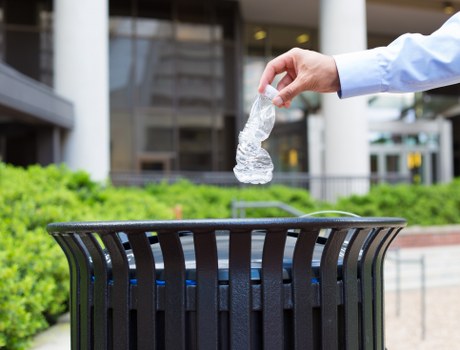 Emergency procedures and incident management form a critical part of the policy. Teams must know evacuation routes, first aid arrangements, and the procedure for dealing with spillage or accidental release of hazardous substances encountered during an office clearance. All incidents, however minor, will be recorded and reviewed to prevent recurrence.
Waste handling protocols require clear segregation: general office waste, secure confidential shredding material, recyclables, and any potentially hazardous items (batteries, lamps, electronic equipment) must be separated at source or segregated during collection. Where specialist disposal is required, the clearance team will follow safe transfer processes to approved facilities while maintaining documentation of waste transfer as an operational record.
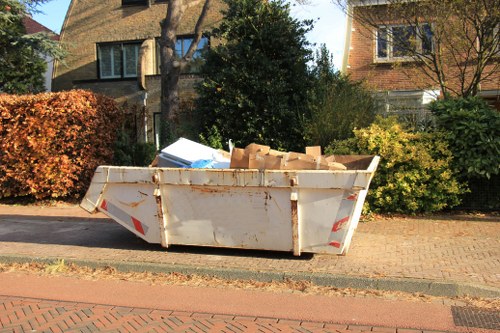 Monitoring, review and continuous improvement are embedded in the safety management approach. Regular inspections, audits and performance reviews will identify opportunities to improve safety during office clearances and rubbish removal services. Feedback from staff on the ground will be used to refine procedures, training and equipment provision.
Contractor and visitor management: All third-party contractors engaged for ancillary services must comply with this policy and demonstrate appropriate competence. Visitors to clearance sites will be controlled and escorted as necessary to prevent exposure to operational hazards.
Health and wellbeing: The physical demands of office clearance work require proactive measures to protect worker health. This includes workload planning to avoid excessive strain, access to hydration and breaks, and support for workers reporting fatigue or injury. Occupational health referrals will be arranged where needed.
Review cycle and accountability: This policy will be reviewed at least annually and whenever there is a significant change in operations, equipment or applicable standards. Management will set measurable safety objectives and report on performance against those objectives to ensure that office clearance and commercial rubbish collection operations maintain a strong safety record.
In conclusion, the Office Clearance Hornsey safety policy commits to protecting people and property while delivering efficient rubbish clearance and office removal services. By following documented procedures, investing in training and equipment, and fostering a safety-conscious culture, the company aims to minimise risk and provide reliable, responsible clearance solutions.
All employees are expected to familiarise themselves with this policy, participate in required training, and apply safe work practices. Supervisors will ensure consistent implementation and take corrective action where standards are not met. This policy complements operational guidance and will be supported by detailed procedural documents available to staff as required.
Effective safety management is integral to quality service delivery for office and commercial rubbish clearance. Commitment at every level ensures that each clearing job is completed safely, sustainably and to the standard our clients expect from a professional clearance operation.
